05.13.2026
San Fransokyo: imagining a denser San Francisco
The city has resisted change for decades, but it is now unavoidable

05.13.2026
The city has resisted change for decades, but it is now unavoidable
Caleb Foust
Welcome to the Sunset. It is an outer district of San Francisco famed for its expansive grid of single-family homes. Visitors remark that the neighborhood feels like a time capsule of a different version of America. They are more right than they know: the Sunset has changed little in nearly a century.
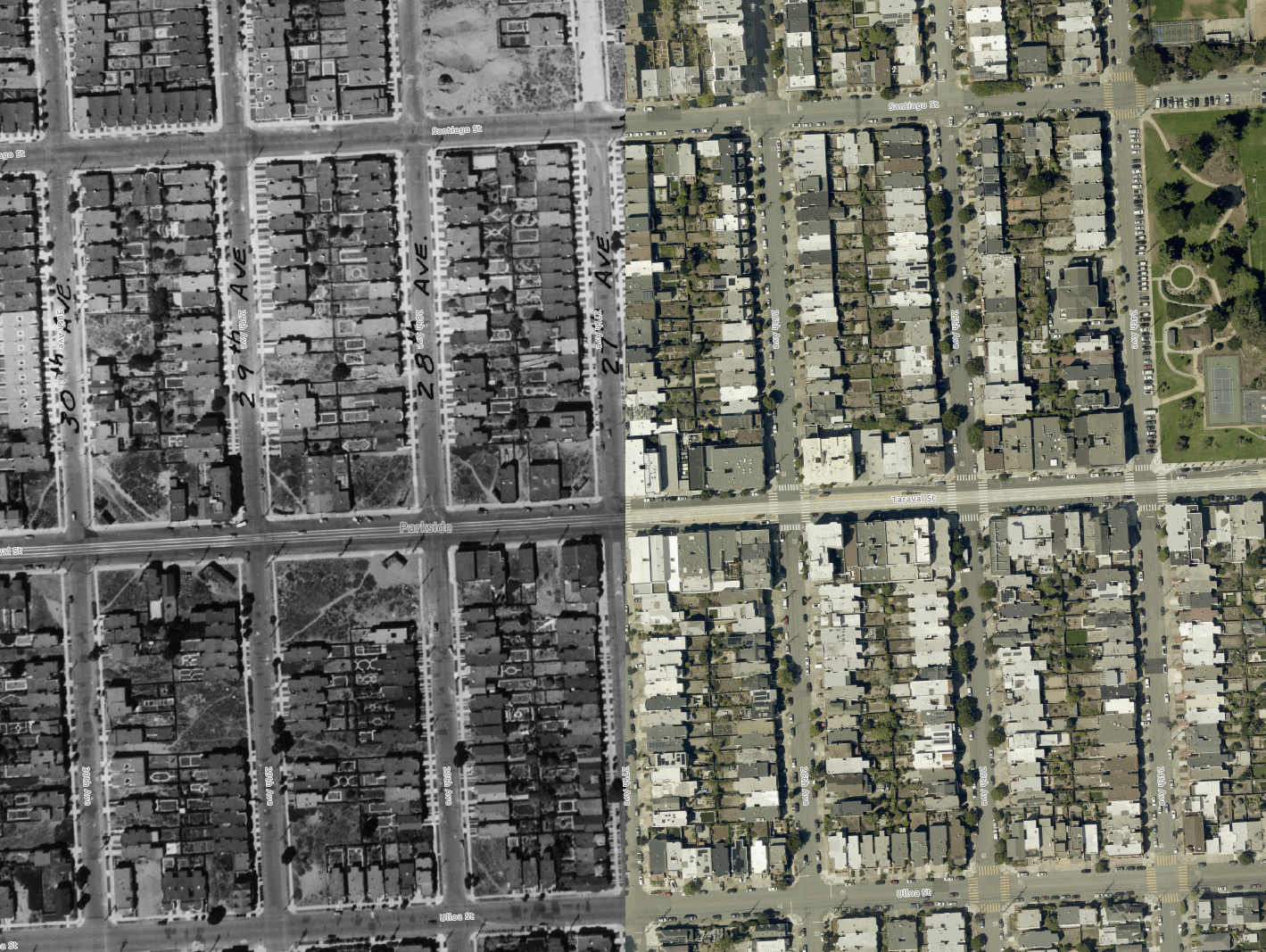
What visitors cannot appreciate is that the Sunset’s appearance is the result of one of the most successful conservative movements of all time. Under the guise of preservation, San Francisco has deliberately and systematically frozen its development.
The city’s legacy is, in a word, unbelievable. It is the home of the Summer of Love, the birthplace of countless social movements, and is now in the midst of an AI boom that could prove to be its most consequential era yet. Despite this, its built environment remains in a self-imposed stasis that acts as a brake on the local, state, and national economies.
In 1978, the city’s Planning Commission restricted the height of buildings in most of the city to a paltry 40 feet. When combined with a salmagundi of other state and local policies that discourage development, the city has ample weaponry to hinder development as it sees fit. The waves of renewal that crash over the city have nowhere to land, pushing housing costs ever higher.
The upward march of rents in the city means that it grows more elite, not less. Instead of addressing the core issue of building restrictions, the city’s leaders pursue policies that direct the benefits of what little development they permit to chosen interest groups.
We at Chinoiserie feel that this dynamic arose due to a lack of imagination. The benefits of development—lower rent, greater job opportunities, and better public goods—are abstract. In lieu of gesturing at statistics, we wanted to show you a different future.
It doesn’t take long for enthusiasts of urban planning to bring up Tokyo. We at Chinoiserie see much to admire in a place that has a thriving urban culture despite its light-touch approach to zoning. The city's densest wards achieve double the population density of San Francisco—and yet the average monthly rent for a one-bedroom apartment is only $1,000.
Tokyo’s city government publishes a dataset containing 3D models of all of the buildings across the city’s 23 wards. For every one of San Francisco’s 5,400 city blocks, we replaced the existing structures with real buildings from across Tokyo until the block’s floor area ratio (FAR), the ratio of usable floor area to lot size, had doubled. We fit the buildings into patterns of alleys just like you find in actual Japanese city blocks.
Call it San Fransokyo. We calculated the impact this redevelopment might have on key statistics about the city:
| San Francisco | San Fransokyo | |
|---|---|---|
| Population | 803,000 | 1,570,000 |
| Housing units | 400,000 | 900,000 |
| Median 1BR rent | $3,790/mo | ~$2,800–3,300/mo[1] |
| Restaurants | 4,000 | 22,400[2] |
Consider, for a moment, what this version of San Francisco could be like. With lower rents, the city could reverse the slow exodus of its traditional communities. It could attract—and house—talented people from across the world and allow them to live and work in a place where they can be the most economically productive. San Francisco could rejuvenate its foundering artistic culture that has been eroded by the rising cost of living. With more residents, the city could support several times its current stock of restaurants, cafés, museums, and other amenities that make urban life worth living.
The benefits of a denser San Francisco go well beyond its borders. Silicon Valley has been the dynamo of the American economy for decades—but it could yet go further. The high cost of living means that workers who might be more productive there are unable to relocate.
This has negative consequences for the entire country. A study in 2019 concluded that restrictions on housing development in high-productivity areas such as New York and San Francisco lowered aggregate U.S. GDP growth by 36% between 1964 and 2009. This translates to $3.7trn a year in lost output—or about $12,000 in foregone income per worker per year. Americans of all backgrounds, farmers and software engineers alike, are worse off because of the decisions of an extreme minority.
Over the decades, city politicians have cast the blame for the city’s problems on any number of scapegoats: avaricious property developers, waves of workers in the technology industry, and the threat of earthquakes. Yet San Francisco’s housing woes stem from a sequence of political choices made and maintained with a clear understanding of the consequences.
Our story continues in the Marina, a sun-drenched neighborhood on the north end of the city.
Few places better demonstrate San Francisco’s reverence for the past. With its neat rows of four-floor walk-ups, the neighborhood nods at density without committing to it. This area of the city is known for its windswept lawns and views of the Golden Gate Bridge. It is, as it happens, also genuinely lovely.
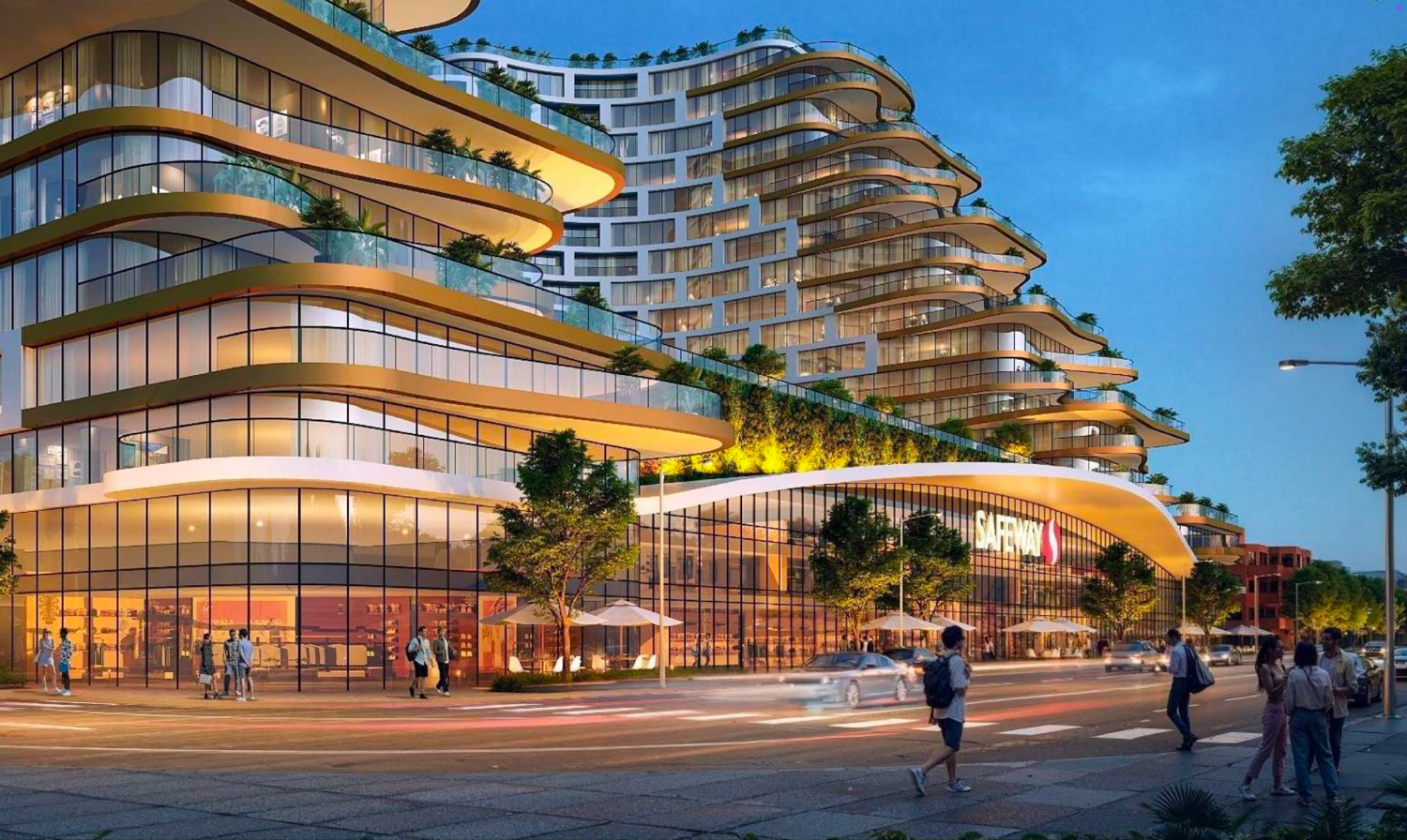
But the Marina is also the site of one of the most contentious housing projects in recent memory. A redevelopment of a Safeway grocery store along the waterfront took advantage of a state law, AB 2011, to circumvent local building restrictions. This project alone would add nearly 800 units of housing, which is a third of the total number of housing units added across the city in 2025 (2,500). Because the project satisfies the law’s conditions, there is nothing the city can do to stop it.
This triggered a furor that reminded residents of all of the contradictions in San Francisco housing policy. The city’s current mayor, Daniel Lurie, was elected in part by supporters of the nascent Yes In My Backyard (YIMBY) movement, which advocates for constructing more housing. Despite this, he came out against the project, saying that “[o]ur administration will stand up firmly to developers that game the system”—i.e. those that adhere to state law.
Pace Mr Lurie, this flavorful line of political thinking—using the language of growth to defend policies that do anything but—precedes his tenure by decades. Lurie is hewing to a political tradition that came about in the aftermath of the original sin of San Francisco zoning: the Planning Commission’s Residential Rezoning of 1978 that downzoned most of the city and made it illegal to build apartment buildings in 76% of it.
This is not to minimize the historical factors that led to its adoption. In the decades from 1950-70, San Francisco experienced a sequence of catastrophes at the hands of overzealous city and state planners. This included the forced displacement of 8,000 residents of the Fillmore, a traditionally black neighborhood, to make room for a highway. This came after stiff, but successful, local opposition to ten freeways with which the state of California threatened to blanket the city. Fear of these acts was justified.
By 1978, San Franciscans had tired of utopian plans for development and were willing to do anything to stop them permanently. In September that year the Commission adopted the plan.[1]
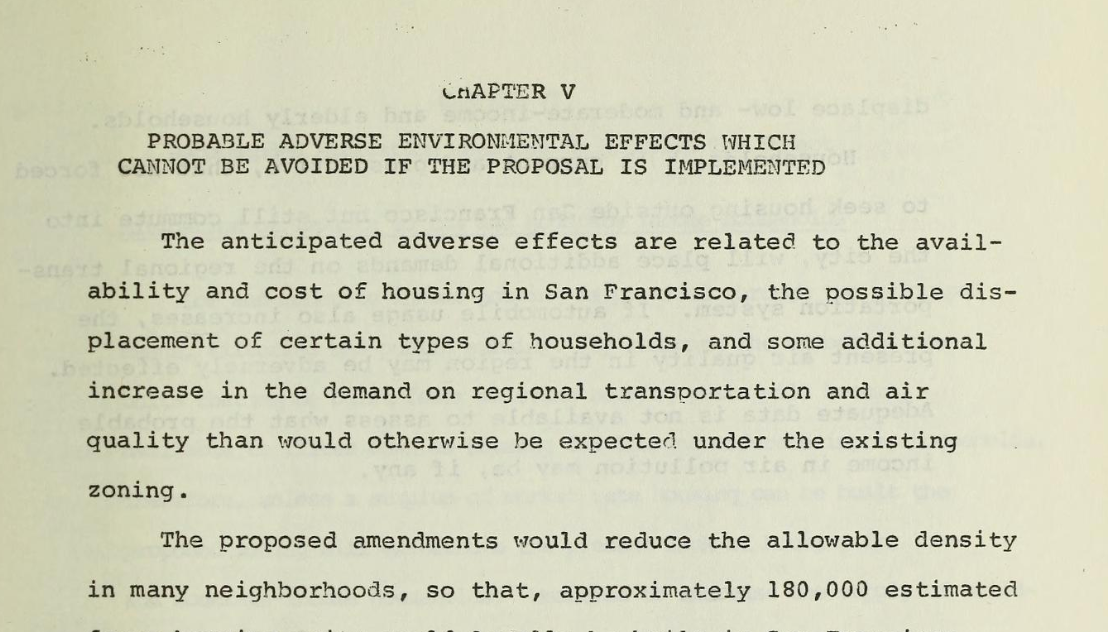
However, halting growth had consequences that were known to city planners at the time. The Environmental Impact Review published prior to the plan’s adoption stated its problems in plain language:
The anticipated adverse effects are related to the availability and cost of housing in San Francisco, the possible displacement of certain types of households, and some additional increase in the demand on regional transportation and air quality than would otherwise be expected under the existing zoning.
The proposed amendments would reduce the allowable density in many neighborhoods, so that, approximately 180,000 estimated fewer housing units could legally be built in San Francisco. As a result the demand for housing in certain neighborhoods may not be accommodated. Prices and rents may be bid upward as a result of limited supply in some neighborhoods.
If programs to make the provision of new housing in underutilized commercial and industrial districts feasible are not implemented, and prospective residents are unable to find suitable housing in San Francisco, they may look outside the city for housing. [...]
If housing prices and rents are forced higher than would normally be expected, adoption of the proposed amendments may displace low- and moderate-income and elderly households.
The vagaries of supply and demand were not a mystery to political leaders at the time. But they chose and continue to choose to cloak their opposition to development in socially progressive terms. They gesture at protecting the “character” of neighborhoods and preserving communities even while, on their watch, the city’s rising tide of housing costs eats away at precisely the people they claim to defend. Every year, lifelong residents of San Francisco are replaced by richer arrivals—and this was, and remains, an explicit political choice.
Measured analysis of pan-Asian affairs.
No spam. Unsubscribe anytime.
In recent years, the California state legislature has adopted a number of measures that supersede local zoning policies. These laws are designed to weaken the stranglehold municipalities like San Francisco have on development.
| Law | Year signed | Summary |
|---|---|---|
| SB 35 | 2017 | Streamlined approval for housing in cities that miss housing targets |
| AB 2011 | 2022 | Nondiscretionary approval for housing on commercial land |
| AB 1893 | 2024 | Builder's Remedy: allows for bypassing local regulations if city in noncompliance with state plans |
| AB 130 | 2025 | Exempts urban infill housing from state environmental review |
| SB 79 | 2025 | Statewide minimum height/density near transit; allows for "alternative plan" that must result in equivalent housing |
Of all of them, SB 79 has the sharpest teeth. It compels cities to allow taller buildings near transit stops. The San Francisco Bay Area’s BART and Caltrain stations trigger higher maximums than city bus stops and light rail stations do. Pictured below is the city’s own visualization of the resulting maximums under SB 79’s default regime.
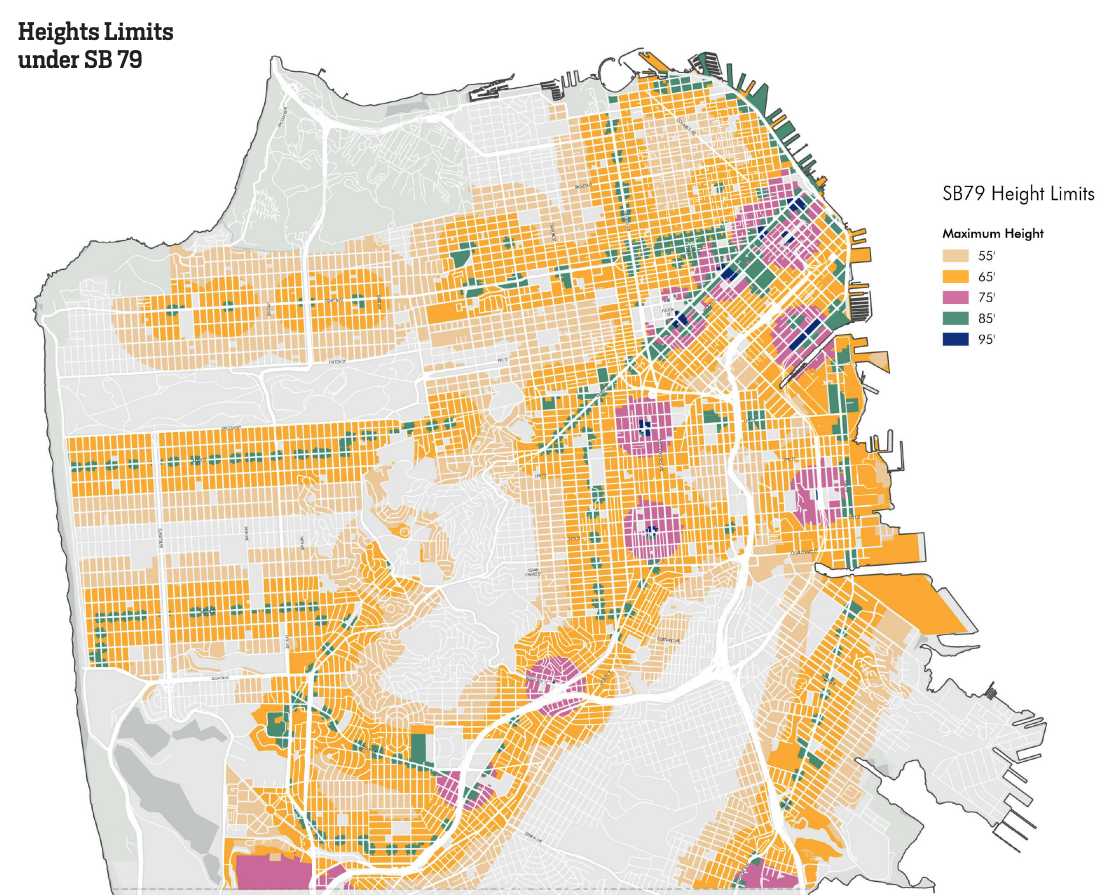
The law takes effect in two phases. During the first, which runs from July 2026, cities can defer implementation in poor neighborhoods. In 2032 this deferral expires and the bill’s prescriptions apply regardless of resourcing.
However, cities can submit an “Alternative Plan” that “shall maintain at least the same total net zoned capacity”. San Francisco did so in the Family Zoning Plan (FZP) that was passed, 6-4, in December 2025 by the city’s Board of Supervisors. It approached this task with characteristic seriousness.
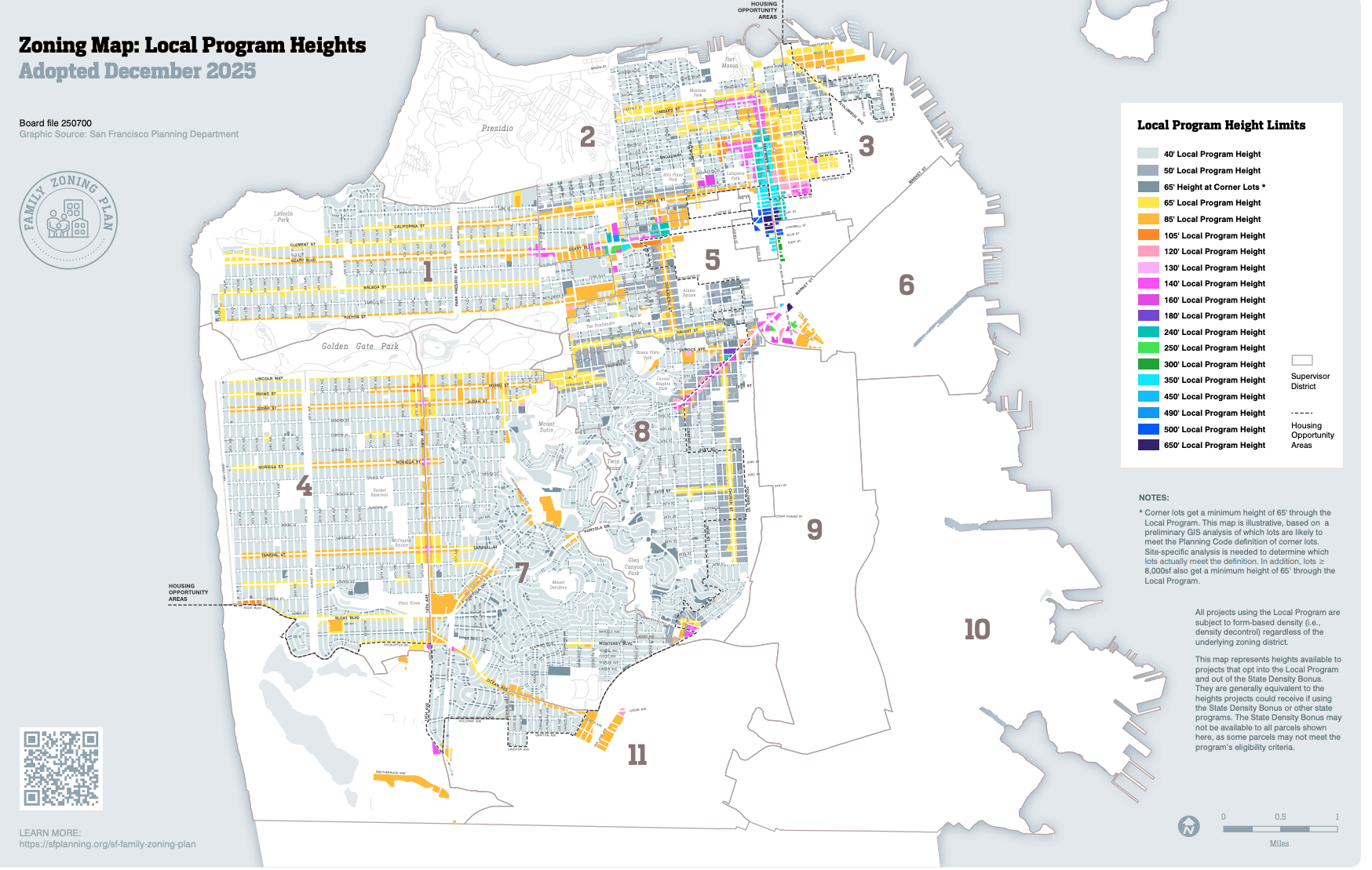
First, the good. The FZP is the largest upzoning in the city’s history—even if it was adopted at the barrel of a gun. The well-off western and northern parts of the city, which includes Sunset and the Marina (#4 and #2 above, respectively), have historically evaded all attempts at reform.
No longer. The FZP quadruples (or more) the height limit along transit corridors across the city. Projects must qualify for the city’s Housing Choice program to make use of those limits, but the scheme’s conditions are, surprisingly, not onerous.
Next, the bad. The plan contains more than enough chicanery to go around. It thumbs the scale by racking up units along Van Ness Avenue, the streak of blue at the top of the map, where it upzoned plots to allow for buildings as tall as 650 feet. Yet no intellectually serious person would conclude that residential towers of that height are going to rise from these plots anytime soon.
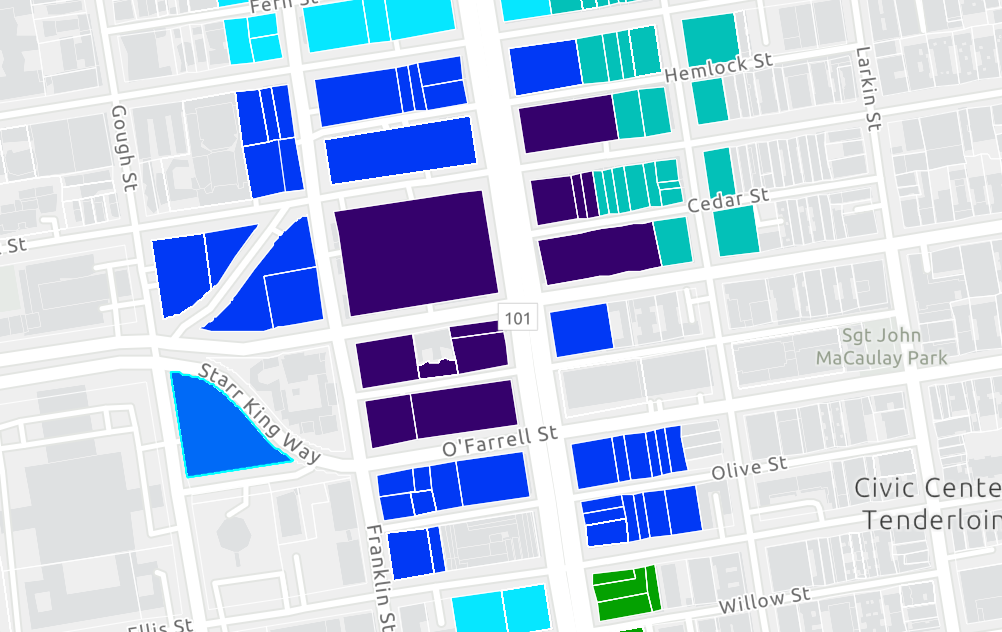
Never mind that skyscrapers built on these plots would be unusually narrow. Even under the rosiest of circumstances, it will be decades before these buildings are redeveloped. The plot in the center, 1101 Van Ness, is a hospital that was completed in 2019. 1035 Van Ness, across the street to the south, is a housing development for veterans that is already being rebuilt. A plot permitting a 500-foot tall building on the hospital’s western flank is currently the headquarters of the Archdiocese of San Francisco—a tenant who is hardly receptive to eviction in the best of times.
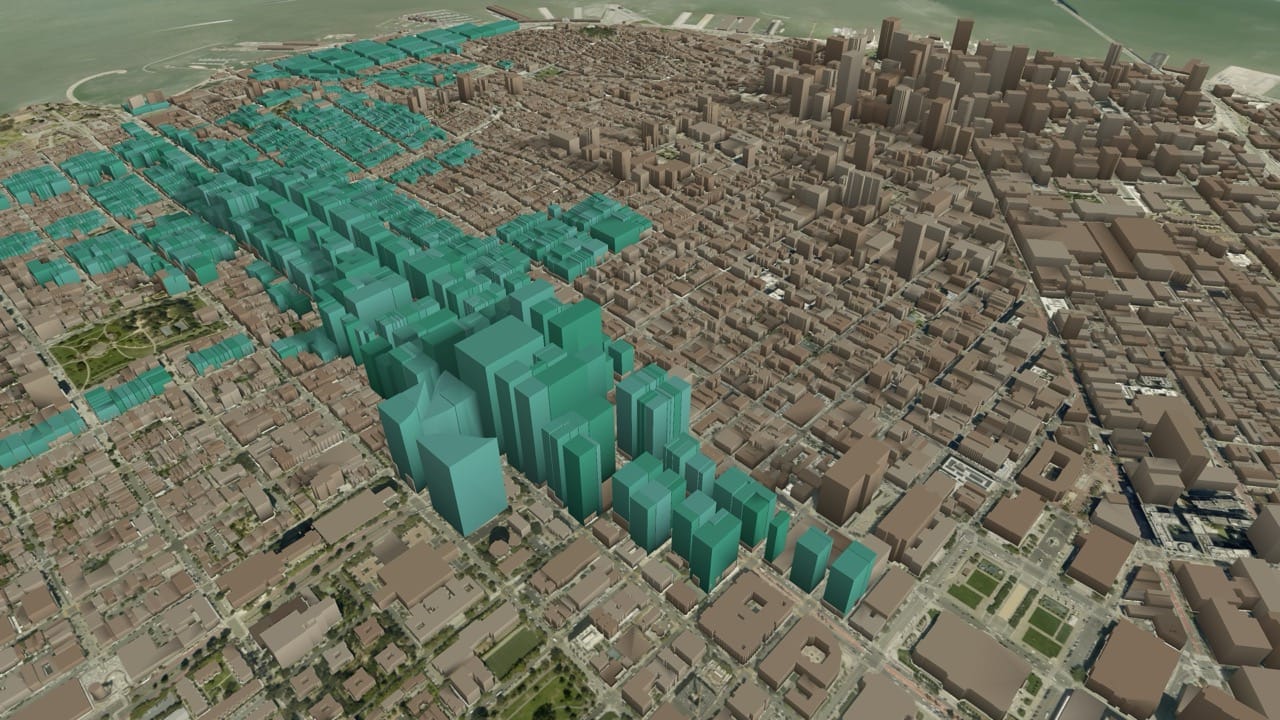
Change is coming anyway. For all its faults, the FZP was a Pyrrhic victory for the city. In California, all regions must submit plans to meet their statewide housing targets, called a Regional Housing Needs Allocation (RHNA), which they agree upon with the state's Department of Housing and Community Development (HCD). Under its current RHNA, which covers the period from 2023-31, San Francisco must issue permits for 29,049 units of housing by January 31st, 2027, or face punitive measures that include forced rezoning to "accommodate 115% of the shortfall"[1]. As of writing, the city faces a deficit of about 10,000 units.
Meanwhile, when SB 79's exemptions expire, San Francisco's leaders must apply SB 79's standards—or an Alternative Plan of equivalent density—to the sections of the city it avoided this time around.
San Francisco's 50-year experiment with anti-growth appears to be over.
Supporters of preservation believe that a city's best days are behind it. Even with San Francisco's immeasurable beauty, this cannot be true. In the time since its development was left to wither, the city has become the locus of a technology industry that is not only world-beating, but has also driven the expansion of the economy of the entire country.
This should not be an opportunity for further exclusion. The city's residents have an opportunity to imagine—and build—a city by the Bay that demonstrates the promise of the 21st century, not one that clings to the 20th.
We at Chinoiserie wish to encourage our readers—both in San Francisco and elsewhere—to consider how we, in 2026, can build cities that are more beautiful, functional, and livable than any that have come before.
Cities reflect the grandness of a society's ambitions. Americans once dreamed of building with boldness and fantasy; they should return to that. We want to live in a world where vacant parking lots downtown are seen as an affront to the sensibility of the entire nation. San Francisco deserves to become the jewel of the West: a dense, vibrant, and lush metropolis that houses all comers. With a little imagination, it can become that.
If you enjoyed this post, Chinoiserie would appreciate it if you shared it with others. We also created a media kit containing static images, animated .gifs, and a video that demonstrate the visualizations used here. You are free to use these assets however you wish.