04.18.2026
The Other Bay Area
A hitchhiking ride that led to an accidental tour of Shenzhen's manufacturing ecosystem

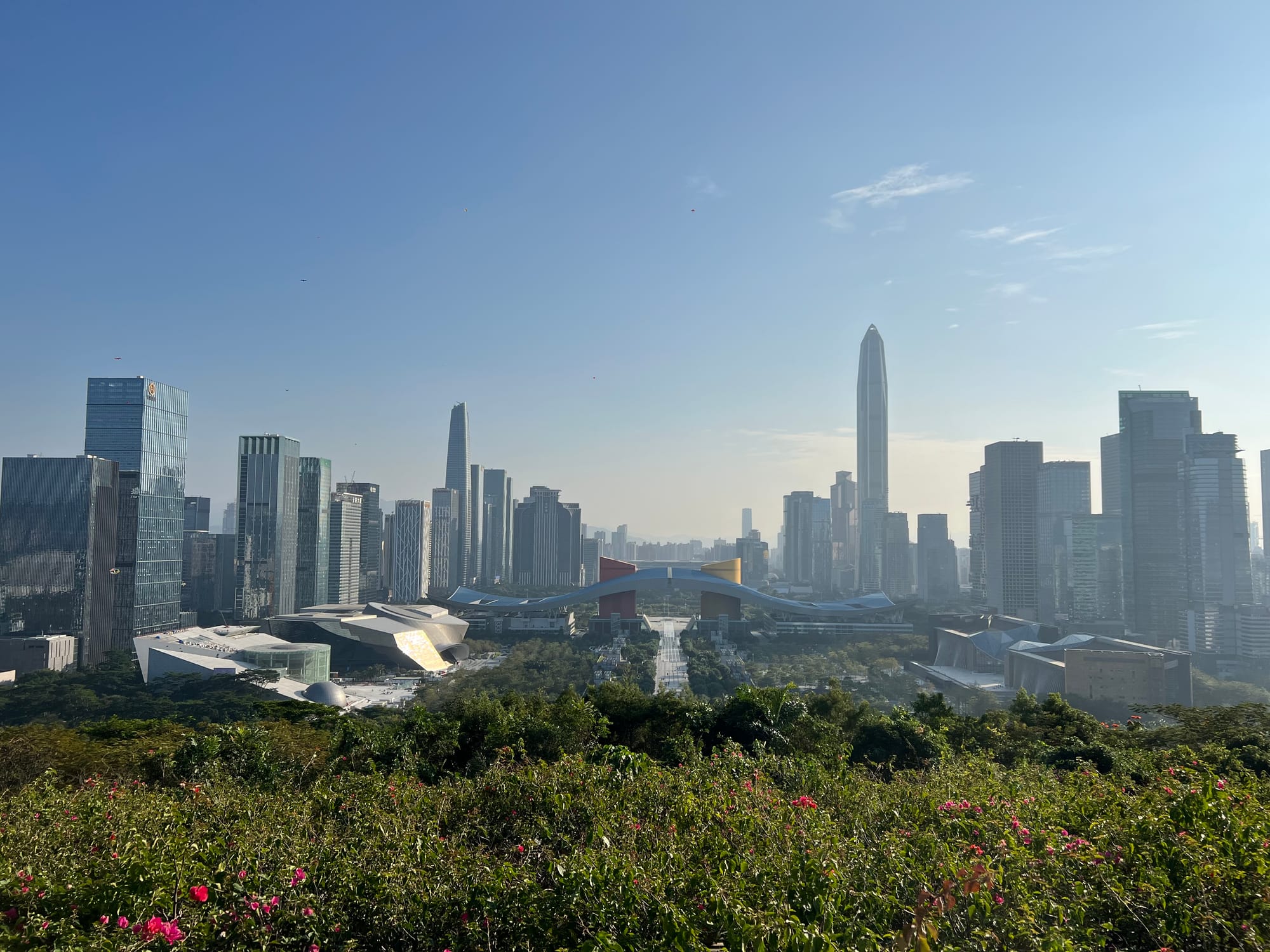
Originally, Shenzhen did not hold my interest. It was time to move on. I stepped onto the roadside in a suburb west of the city and stuck out my thumb. In my other hand was a sign, in Chinese, that said "Guangzhou", a city only a few hours away by car. Someone stopped in front of me, a woman in her forties. She rolled down her window and waved. When I approached, she said, "I'm not going there today. I'm headed there tomorrow though, maybe. I'm on my way to tour some factories. How about you come along?" A ride's a ride. I got in.
The driver introduced herself as Zhang. (This is a pseudonym.) She was in Shenzhen on a business trip to find a manufacturer for a new product her company was developing: live translation headphones. Her company, which she headed, consisted of a few dozen employees based in a coastal city on China's eastern seaboard. Over the course of the day I accompanied her as she visited a handful of factories and small electronics stores both in the city's urban core and in its outer manufacturing districts.
This was an unwitting tour of Shenzhen's hardware manufacturing ecosystem. The city is a global powerhouse: it is likely that you are reading this article on a device with components that were manufactured there. Beyond its manufacturing prowess, Shenzhen has an ecosystem of companies that sprung up to design and sell products abroad, predominantly on Amazon. Some 100,000 of them ply their trade in the area. In my ride along with Zhang I got a preview of the product lifecycle there: initial negotiations with manufacturers, the experience on the factory floor, and the challenges of selling the finished product abroad.
As the city's government website affectlessly describes it: "[w]ithin a one-hour drive from Shenzhen, you can procure any main parts or accessories for any industry." This is not (much of) an exaggeration. I have spent much of my career in Silicon Valley working at robotics startups. The pull of Shenzhen was strong: I had colleagues who made regular pilgrimages to the city in the pursuit of printed circuit boards (PCBs) and other components, all without having any command of Mandarin.
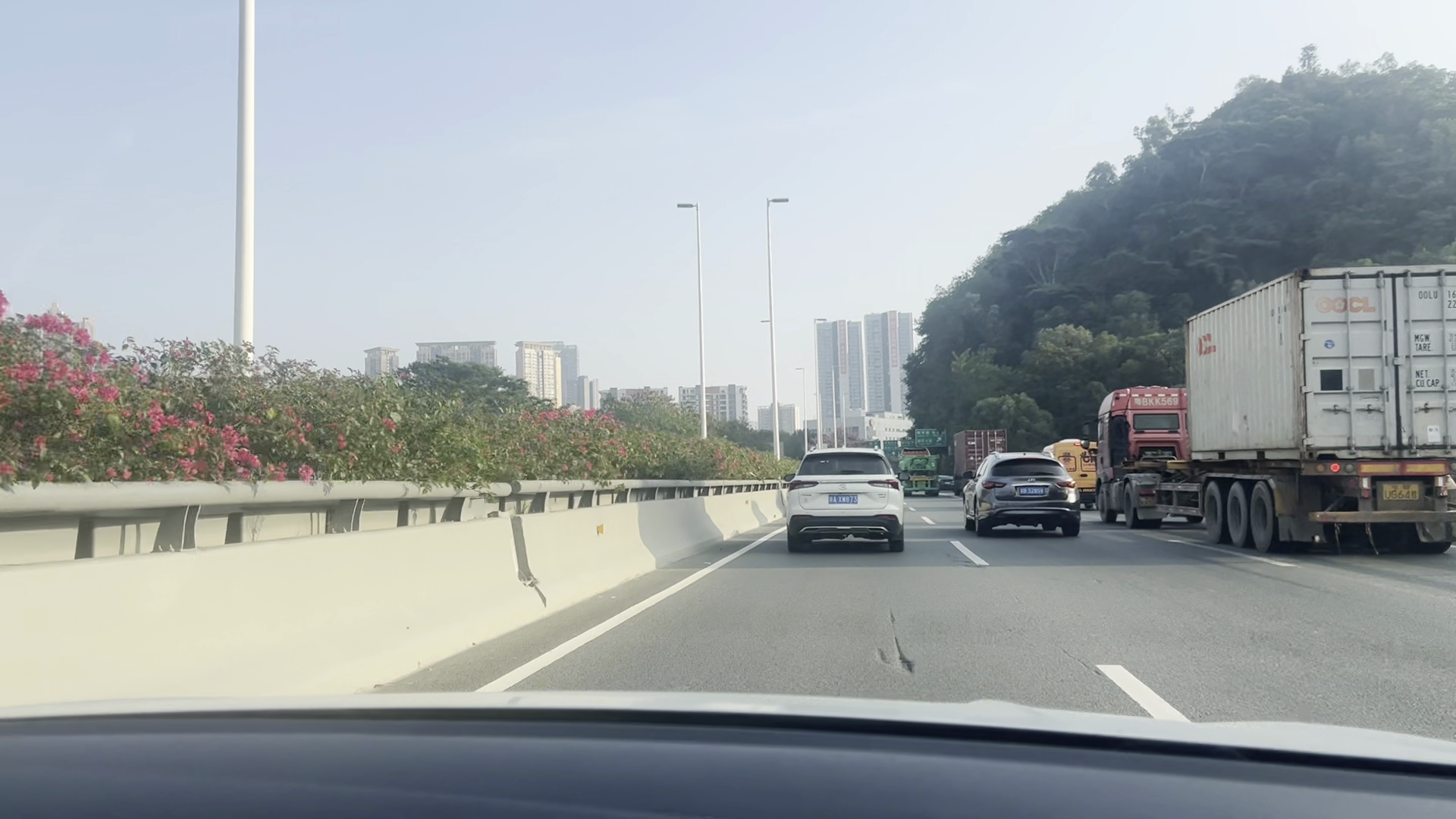
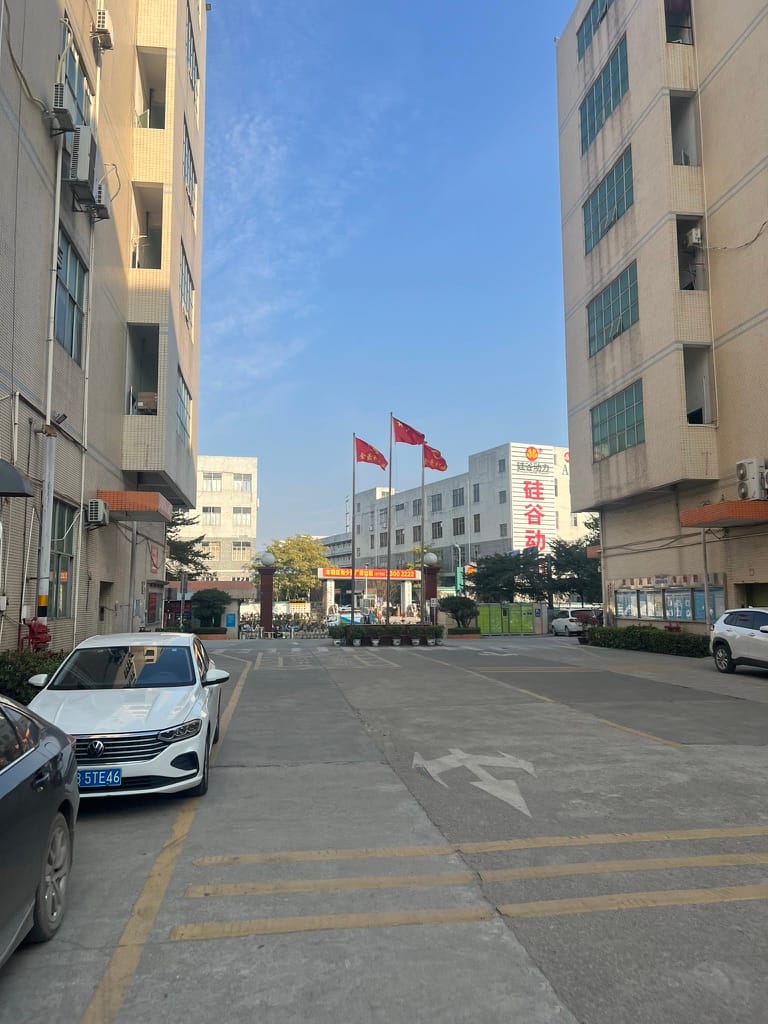
Zhang drove towards the industrial hinterlands on the northern end of the city. The scenery was not what I expected, to put it mildly: flower beds flanked the roadway. There was no detectable December chill in the 68°F (20°C) breeze. Eventually, we exited the highway and glided into a labyrinth of factories. These were not the concrete hulks of your imagination, churning out steam and leaking sludge into neglected waterways. They consisted of gated complexes with squat, 4-to-8-story buildings that advertised their manufacturing specialties in large red characters along their height. The neighborhood was tidy.
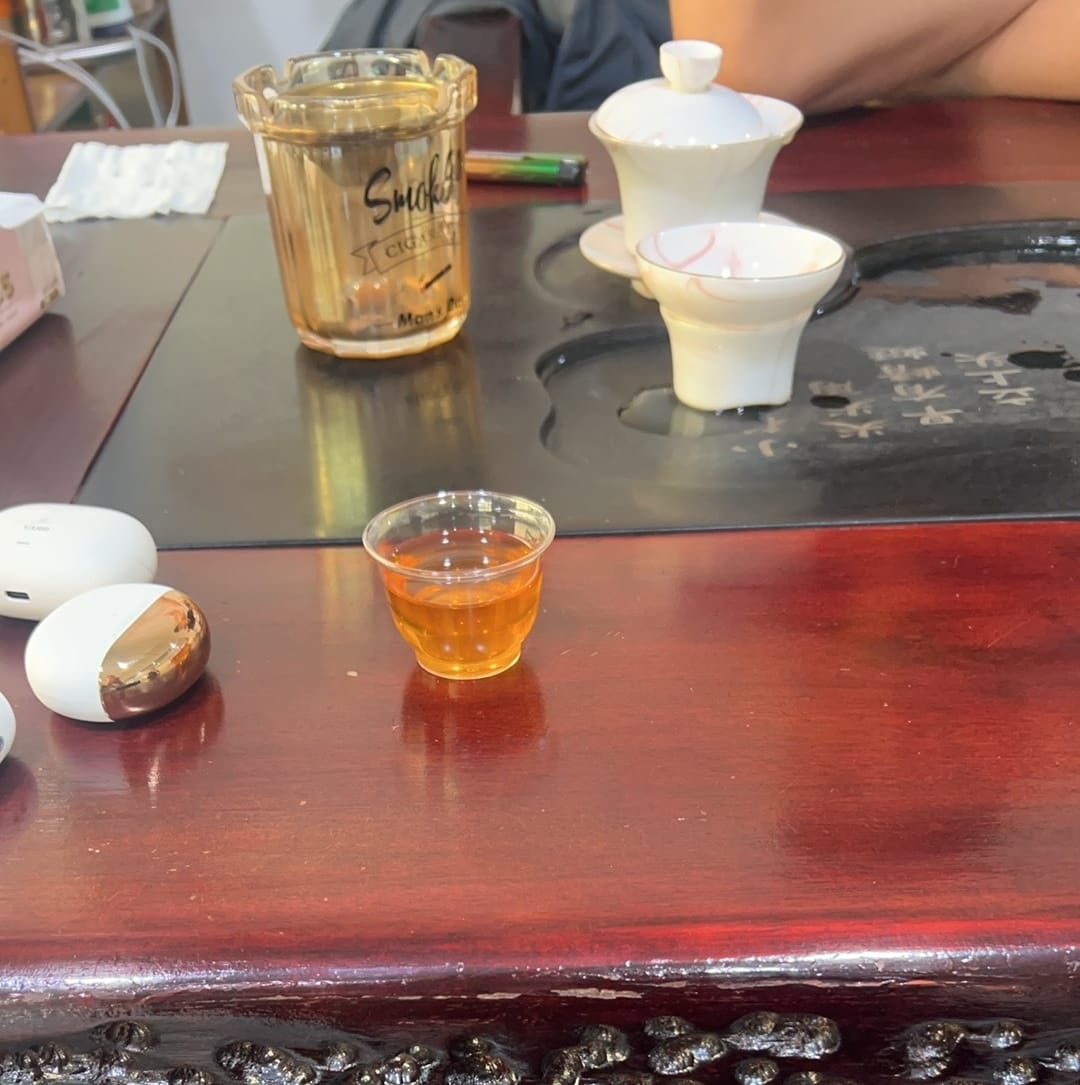
Zhang beckoned me inside with her when we arrived at the first factory. She made a confirmatory call to her contact and a short while later a man strode out of the main entrance of the building, smiling, talking on the phone, and smoking a cigarette all at the same time. He ushered us up the stairs and down a hallway with glass windows that looked into workshops and administrative offices for a range of different companies. His own office space was a flurry of activity, with a gaggle of employees gathered around a computer discussing a schematic. He showed us into a conference room and offered both of us tea from a table built for the purpose.
Zhang and the boss didn’t waste much time on pleasantries. While they discussed prices, I inspected samples that covered a shelf behind the factory boss. There sat wireless headphone cases of all imaginable dimension, color, and functionality. To call these AirPods clones would be disingenuous: some had screens of various types and proportions; others resembled game controllers. In the same way that Silicon Valley seems to burn through every possible configuration of software, here was the same in hardware. Little of it would be recognizable in the West.
While their discussion raged, Zhang occasionally nudged me to get me to weigh in on some point of importance. It seems she deployed this for dramatic effect: “What do you think?” she’d say in half a whisper. “Would this sell in America?” I played into the bit, and added an appropriate delay until the boss visibly began to fret, then I nodded. The price per unit the two were discussing ranged from 70–120 RMB, or about $10–20, for an eventual sale price in the US of $100–200.
If that sounds surprising, observe that preparing a product for sale in the US involves designers, manufacturing, packaging, transportation across the world’s largest ocean, warehousing at the destination, and marketing, in addition to the cut taken by Amazon. All need to be paid out. It doesn’t end there: Zhang’s products in particular rely on mobile applications on the Android and iOS app stores to function. It is tempting to discount the sometimes shoddy software of these products, but remember that it is the result of a culture of scattershot, rapid innovation.
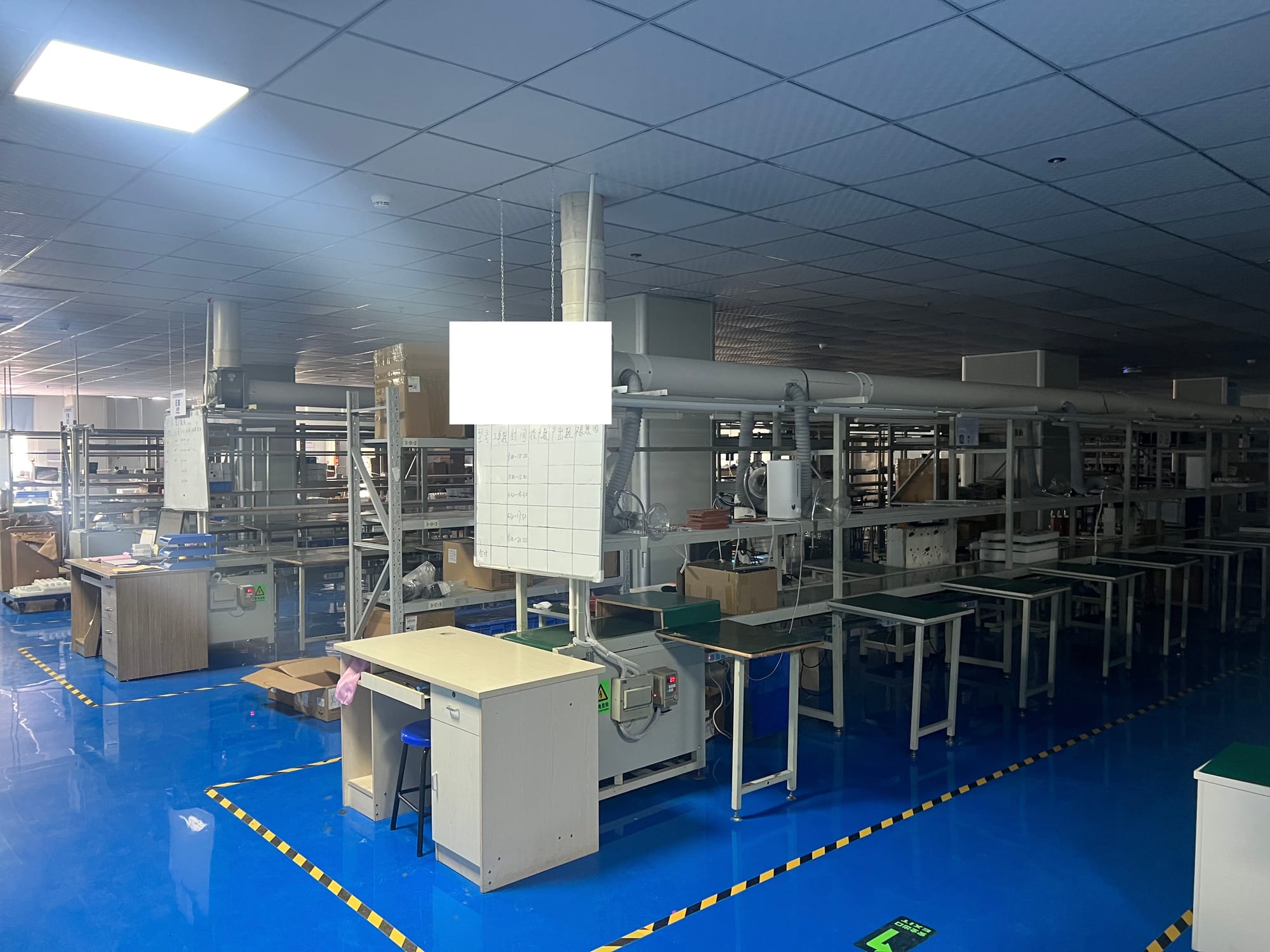
After they had finished their discussion, the boss took us on a tour of the factory floor, which was not yet in operation that day. In my imagination it would be a long line of robots with partially-complete devices clattering from station to station on conveyor belts. When he opened the door to the work room there was only row after row of work stations, each of which was equipped with a small desk. In the back of the room a man snoozed in the darkness, his arms propped up on one of them. Finished products sat by the hundreds on wooden pallets against one wall, swaddled in plastic wrap. The factory boss picked up a roll of stick-on labels and showed us logos for several different brands that bought the output of his factory.
Too often the word "factory" becomes a primitive of technocratic abstraction. Material in, product out. These days when I liberate a fresh Amazon purchase from its packaging I can't help but think of the folks I saw here browsing Douyin and eating instant noodles in the pre-shift darkness.
We spent the day hopping from factory to factory with little variation in the script. Sometimes Zhang would leave me outside and call me in on demand. I stood in the vast lobbies of high rise offices whose concrete had seemingly only dried a few months prior. The glass walls of shuttered businesses advertised services for company and trademark registration in America and the EU.
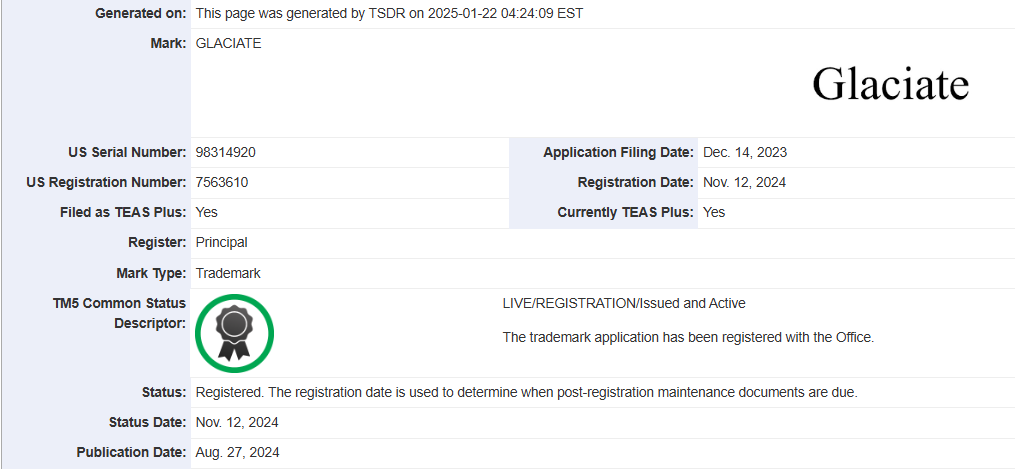
On one of our many car rides that day Zhang explained to me that she could choose from banks of preregistered trademarks for her products. She showed me a spreadsheet with hundreds of names that were closer to NSA cryptonyms than product names: Glaciate (menacing), Rainbow Forest (EDM?), and random amalgamations of syllables like WLLNEE. This phenomenon—the preponderance of products with otherworldly names—is greater in scale than I could have imagined: in 2022, 25% of United States Patent and Trademark Office trademark applications were for businesses from China.
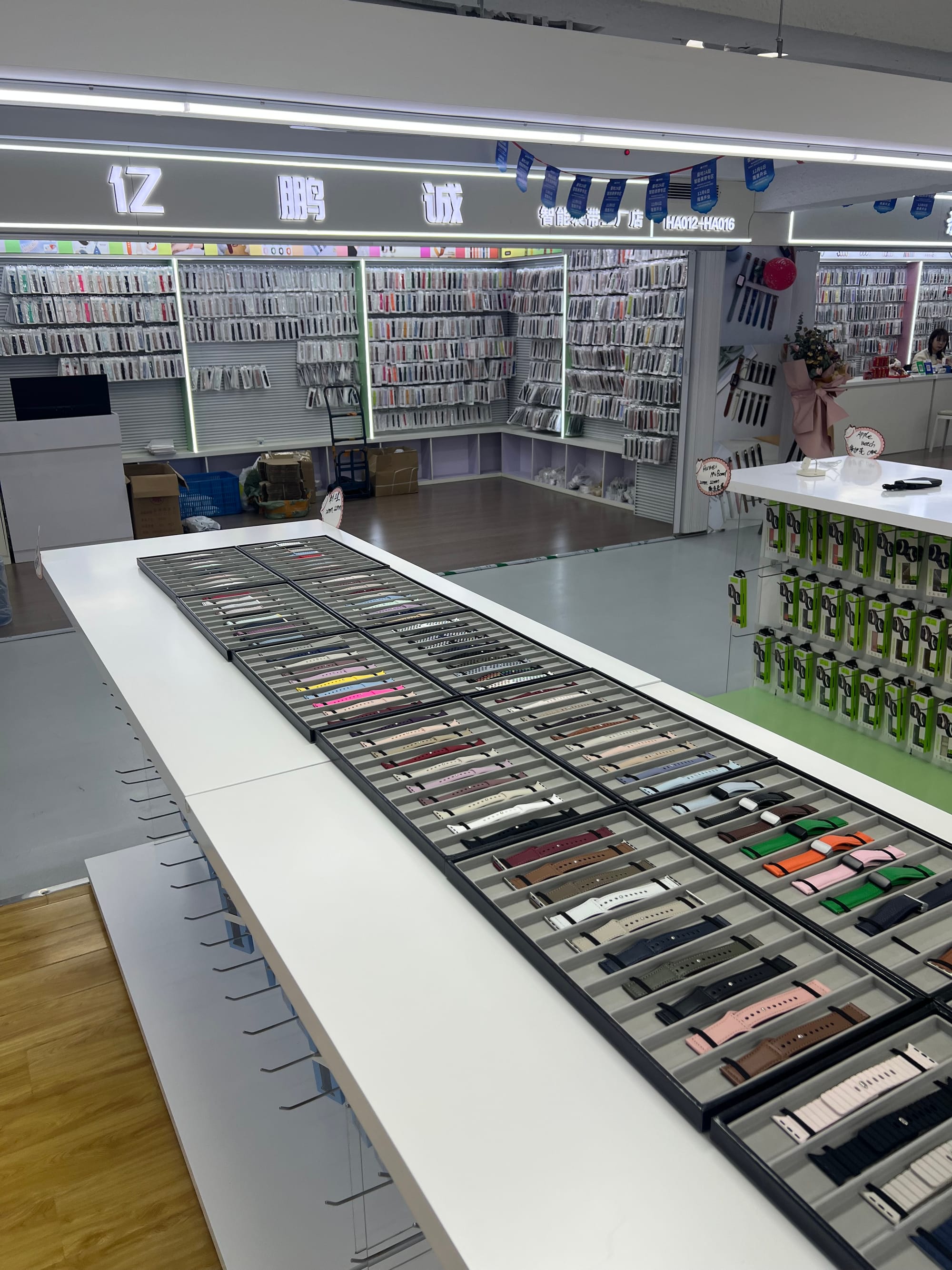
In the late afternoon Zhang and I battled traffic to return downtown to an area of the city called Huaqiangbei. It resembles an overlapping thicket of shopping malls that covers half a square mile with 38,000 businesses churning inside. Many, famously, are stalls that are just a meter wide. (The committee that runs the complex claims that 50 entrepreneurs who started in one of these single-meter stalls went on to become billionaires.) Every shop has a different specialty that is as surprising as it is obscure: in one area, I passed storefront after storefront of shops selling just Apple Watch bands.
Speaking of which, one thing that goes unobserved by most foreign visitors is that Huaqiangbei has useful services even for everyday people. Some time prior to my visit I shattered the screen of a rare (but out of date) Apple Watch that, for reasons unenumerable, held sentimental value. The Apple Stores and repair shops I visited in Taiwan either proposed exorbitant prices or refused to fix it for lack of parts and expertise. After I explained this to Zhang and showed her the watch she studied it, then consulted a few nearby vendors. Finally one said he'd fix it, original parts, 500 RMB (US$70), return in half an hour. Sure enough, it was done in time and looked good as new.
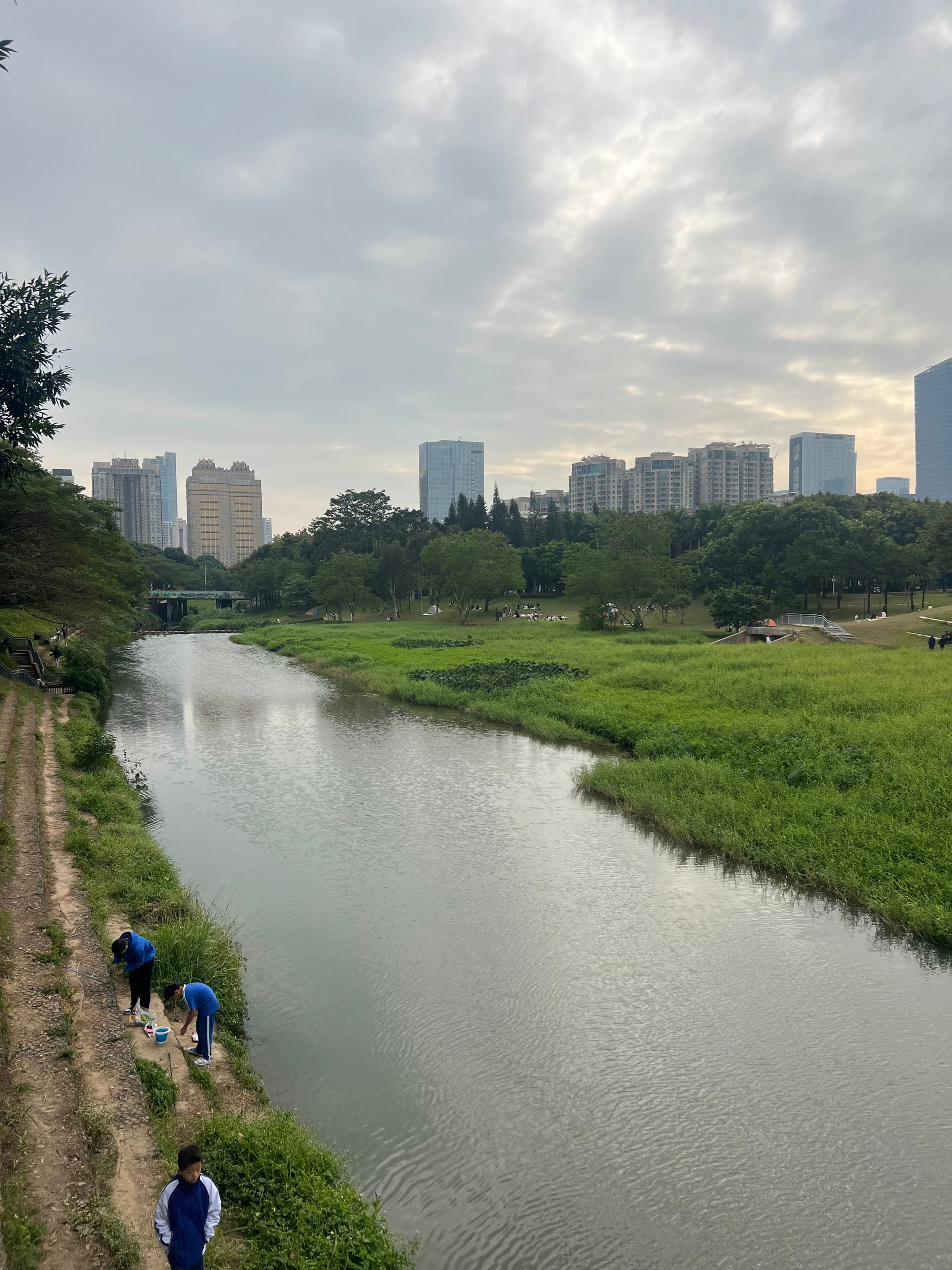
One advantage to living in San Francisco is that you get delighted by new software far in advance of the rest of the country, if not the world. Shenzhen gives the same feeling, but for hardware. While Zhang busied herself in Huaqiangbei, I took a walk in a nearby park. I watched as a couple retrieved a takeout meal, delivered by a drone, from a station on the edge of one of the park’s sprawling lawns. The next day, as promised, she ferried me onwards to Guangzhou, where my journey continued.