05.18.2026
Chinoiserie Weekly: May 1–14, 2026
The Big Don and the Chairman

Field Note
Welcome to the first issue of Chinoiserie Weekly!
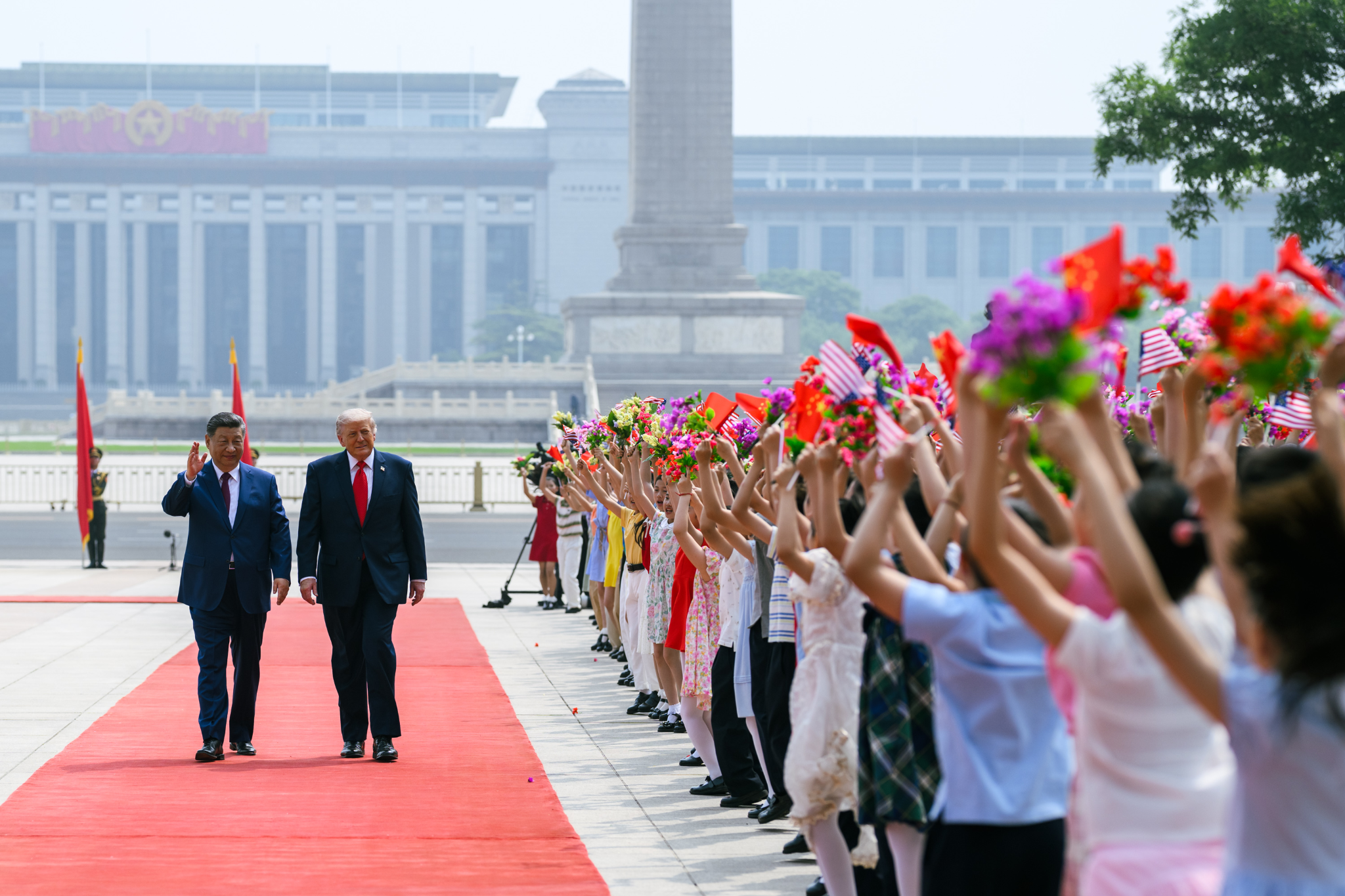
We’re launching right after the most consequential diplomatic summit in Asia in years: the last time a U.S-China summit took place was 2019. Needless to say, this is the biggest headline coming out from Asia this past week, and much has changed in the world since then.
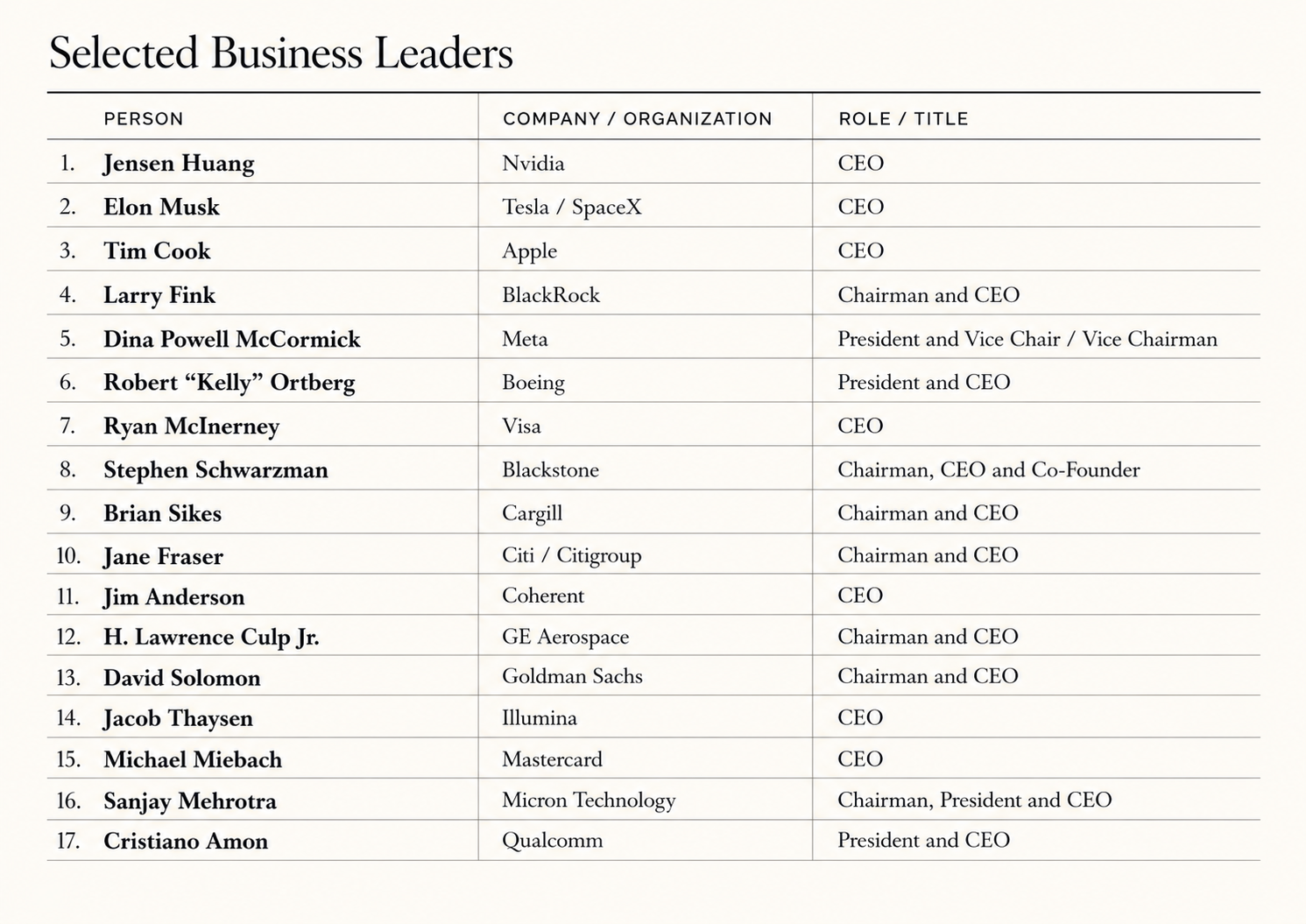
Unlike past state visits, the role of tech seems to have taken on a primacy in both substance and reporting, with a large roster of CEOs joining the trip: a group representing the largest U.S. industrial and business interests. Jensen Huang was reportedly a last minute addition - one can imagine the sorts of negotiations that culminated with him sprinting up the stairs to board Airforce One in Alaska.
So what was big here?
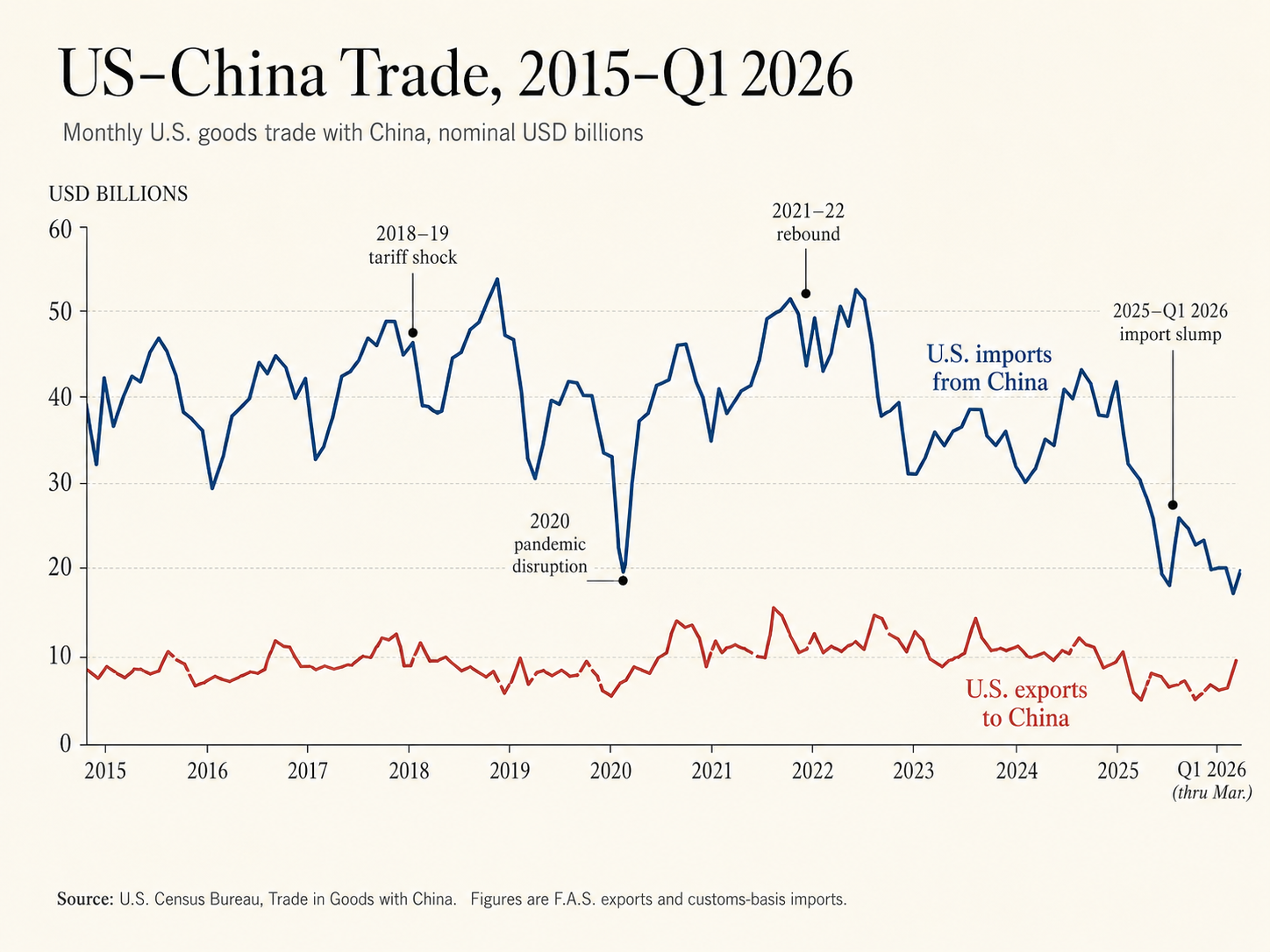
The U.S.-China tech relationship has been materially decoupling over the last Trade did not vanish. Supply chains did not snap cleanly in two. The U.S. and China still did $414.7 billion in goods trade in 2025, even after U.S. exports to China fell 25.8% and imports from China fell 29.7% from the previous year. Trade is tempered by tariffs and much more conditional on political winds, but continues to be one of the most consequential trading relationships in the world today.
What we’re seeing now is more nuanced than decoupling: permissioned globalization. Chips may be sold, but only to approved buyers, under licensing terms, with security procedures, military-use restrictions, inventory certifications, and, in the H200 case, a Trump-negotiated arrangement in which the U.S. would receive 25% of revenue and the chips would need to pass through U.S. territory before being shipped to China.
The thing is that China may now be the blocker as much as the U.S. Nvidia says China has encouraged customers to buy from domestic competitors and discouraged purchases of Nvidia data-center products, including China-specific products designed to comply with U.S. export controls. In its Q1 FY2027 outlook, Nvidia assumed 0 data-center compute revenue from China.
On the flip side, China controls key rare earths and has managed the flow of those as leverage. USTR Jamieson Greer said rare-earth flows from China to the U.S. have improved, but that Beijing still drags its feet on some export licenses, forcing U.S. officials to intervene on behalf of affected companies. Yttrium, a rare earth used in semiconductor and aerospace supply chains, for instance, has been in short supply for more than a year.
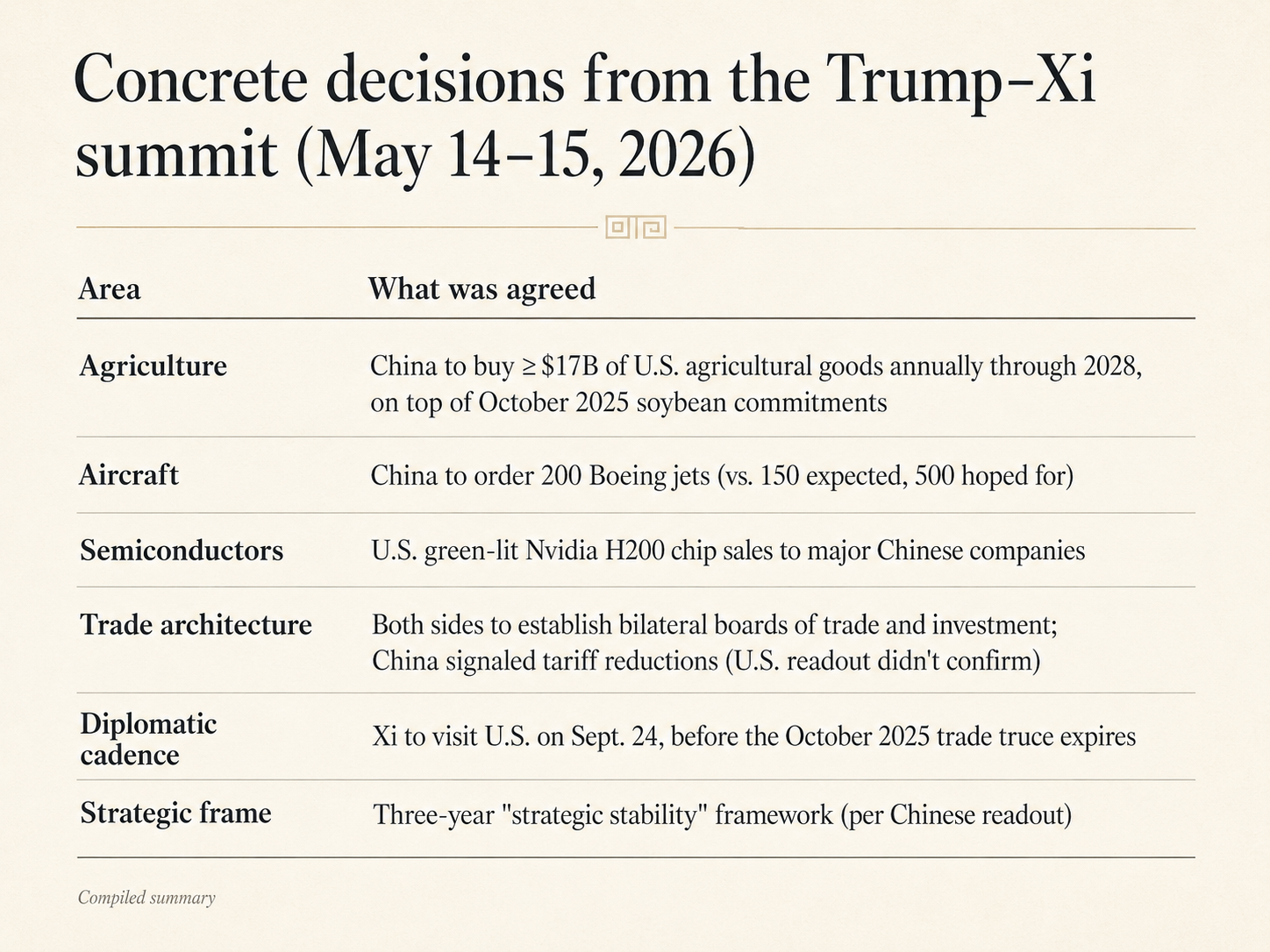
The good (?) news: the summit culminating in a working framework termed “constructive strategic stability” - a framework intended to guide relations for the next three years compared to the acrimonious rhetoric that has dominated the airwaves for the last stretch. Interestingly enough, this has been emphasized considerably more in the Chinese readout of the summit and has seen considerably less coverage by Western media outlets.
Capital Signals
Deals worth reading past the headline for
Interesting (and massive) deals across Asia the past few weeks: large-scale data center investments repurposing Japan’s industrial heritage, humanoid robotics raising large rounds in China, PE giants battling over rerating legacy Web 2.0 websites as multi-billion dollar AI bets, India getting into edge computing and chip design, and more!
Sony × TSMC — Strategic JV — Undisclosed — Sony majority, TSMC minority
Sony Semiconductor Solutions and TSMC signed a preliminary agreement to create a next-generation image sensor JV in Kumamoto, with Sony as the majority and controlling shareholder. The companies say the JV would combine Sony’s sensor design with TSMC’s process and manufacturing capabilities, with Japanese government support expected.
Why it matters: This is a signal that TSMC’s forays into Japan are going well - the latest addition representing an additional expansion to the burgeoning semiconductor hub in Kumamoto. Furthermore, this is Sony’s first direct 1-on-1 JV with TSMC, building on its previous JASM JV with participation by both Toyota and Denso.
SoftBank Sakai — Expected up to ¥1T JPY ($6.7B USD) Investment — AI data center plus battery manufacturing
SoftBank announced plans to use the former Sharp factory site in Sakai, Osaka as a hub for an initial 150MW AI data center (target expansion to 400MW), AI infrastructure hardware, and - newly announced - gigawatt-hour-scale battery production by around FY2028.
Why it matters: The deal, originally announced in 2024, is reflective of sequential bets to address AI infrastructure bottlenecks, spanning land, power, batteries, grid management, and old industrial real estate. It also represents a repurposing of Japan’s industrial legacy
Kakaku.com — Take-private battle — Approx. $4B valuation — LY/Bain vs. EQT
SoftBank-backed LY Corp. and Bain doubled down on their bid for Kakaku.com, valuing the Japanese price-comparison and marketplace operator at about $4 billion and topping EQT’s rival offer. LY described Kakaku’s businesses as having “extremely high strategic value” in light of generative AI.
Why it matters: This is the Japan internet deal of the week - price comparison, restaurant reviews, job search, and intent data are being re-rated as AI-era assets, not just aging Web 2.0 properties with cash flow. Expect to see more: Bain just raised a $10.5B USD Asia fund, with half earmarked for Japan, while EQT raised a $15B USD for its largest Asia fund ever - oversubscribed.
ROBOTERA — New financing round — Over $200M — SF Group, HSG, IDG Capital
Beijing-based humanoid robotics company ROBOTERA raised more than $200 million in a new round led by SF Group, HSG, and IDG Capital, with a long list of industrial investors including Alibaba, Geely Capital, BAIC, Dongfeng Asset Investment, Lenovo, Haier, Singtel Innov8, China Unicom-affiliated funds, and others.
Why it matters: Lest someone frame Chinese humanoid robotics as just a fad, this deal represents capital from the same logistics, automotive, telecom, and industrial ecosystems where deployment would actually happen.
Config — Seed — $27M — Samsung Venture Investment
Config, a robotics data startup, raised a $27 million seed round led by Korea’s biggest manufacturers: Samsung Venture Investment, with Hyundai Motor’s ZER01NE Ventures, LG Technology Ventures, and SKT America also joining as strategic investors.
Why it matters: Korea’s biggest manufacturers are underwriting the motion-data substrate that should be key to enabling physical AI to become a practical tool in the coming decade.
HrdWyr — Series A — $13M — Ideaspring Capital
Bengaluru-based HrdWyr raised $13 million for AI-native system-on-chip products targeting edge computing, consumer electronics, EVs, industrial systems, and data centers. The round was led by Ideaspring Capital, with Singularity AMC, Avatar Growth Capital, and Persistent Systems participating.
Why it matters: India’s burgeoning semiconductor industry is finding a plausible angle in going after edge-AI silicon: Intel, AMD, and memory veterans aiming for a lower latency and power chip fabless chip design play to power AI in manufacturing.
Backchannel Whispers
1. “Approved, but no deliveries”
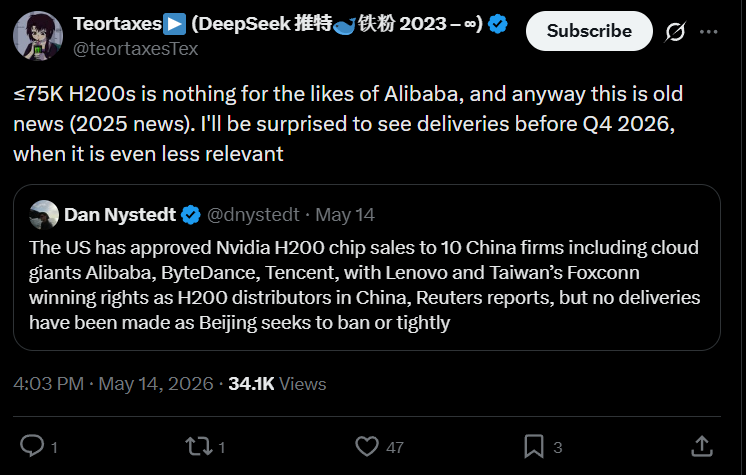
There’s been much hubbub about the U.S. clearing 10 Chinese firms to buy 75,000 Nvidia H200s each, but no deliveries have actually happened - yet. Chinese buyers have pulled back amid guidance from Beijing and scrutiny of foreign tech dependencies. There’s also a question raised here about how significant that would actually be. Jensen Huang, Nvidia’s CEO, says he projects China’s market becoming “more open” over time.
2. Vietnam Infrastructure Boom
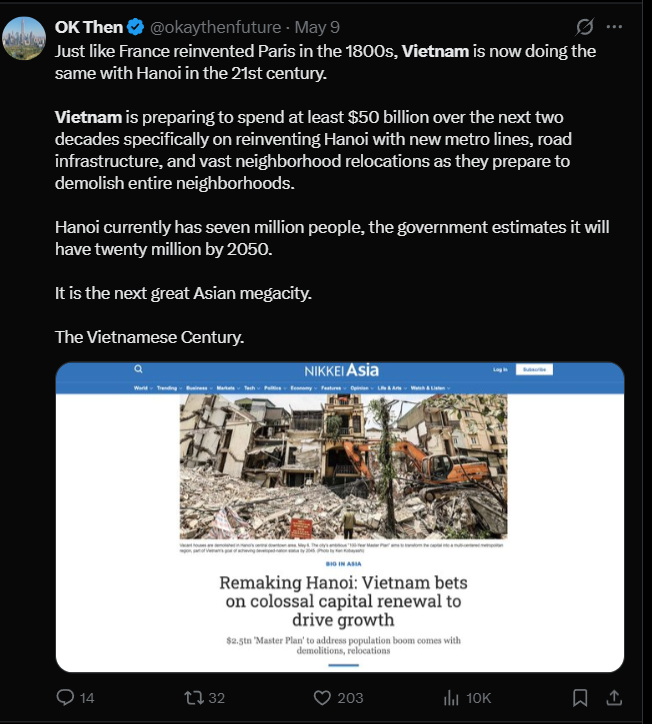
Fully expecting social influencers to be posting Hanoi cyberpunk cuts in 2040.
The Question of the Week
If AI infrastructure is now licensed, routed, subsidized, inspected, and politically interpreted at every layer, is there space for emerging startups to scale across borders without becoming geopolitical chess pieces?
Reference: China blocks Meta’s $2B Manus deal after months-long probe
Additional Good Reads
Asia Tech Review - Amazon failed in Southeast Asia because it never even tried
KonichiValue - Why are Japanese twentysomethings starving themselves to buy the S&P 500?
TechCrunch - China’s Moonshot AI raises $2B at $20B valuation as demand for open source AI skyrockets (Becoming China’s top funded LLM startup)
Nikkei Asia - Andreessen Horowitz to open Japan office by summer, co-founder tells Takaichi
Việt Nam News - Việt Nam prioritises 70 high technologies for strategic development
Reuters - Singapore needs to attract AI giants, expand energy hub status, growth committee says